
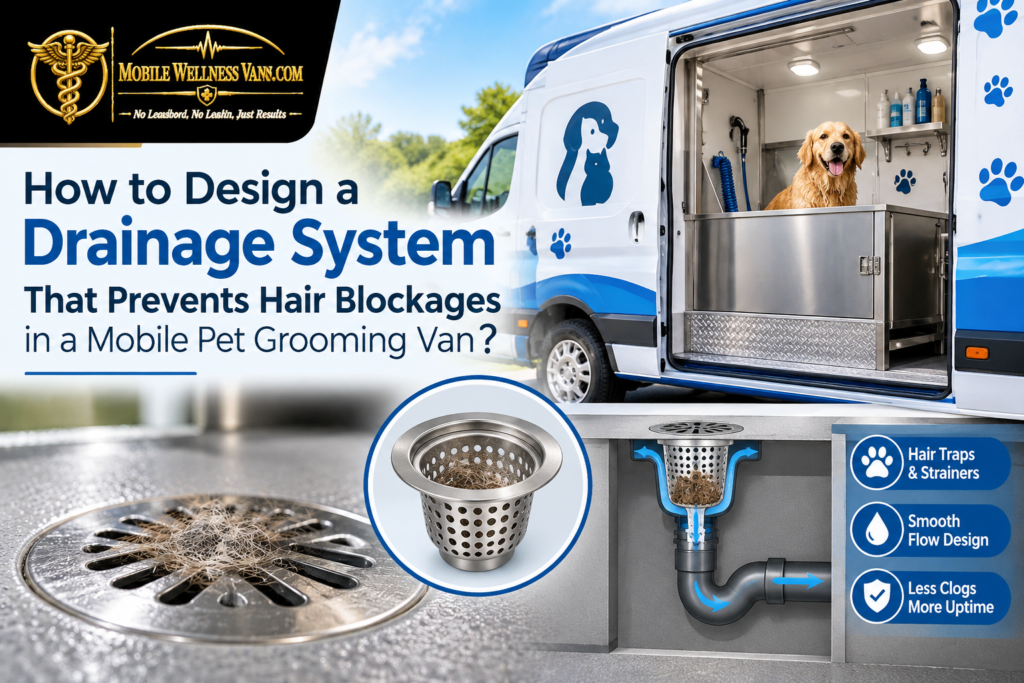
Summary: The mobile pet grooming van drainage system must have working hair traps, the right pipe sizes and appropriate places for drainage cleaning and appropriate wastewater storage. Properly designed plumbing will not have clogging problems, water accumulation, or delay the scheduled appointment. Regular testing and inspection ensure efficient performance, which makes drainage planning an integral aspect of a professional grooming van renovation project.
A clogged drain can turn a routine dog bath into a frustrating delay, leaving standing water in the tub and disrupting the day’s appointments. The situation is more complex in a mobile pet grooming vans: there is limited space for plumbing, and there needs to be an onboard waste water storage tank. Cleaning starts before the pet goes into the van; by designing a sophisticated drainage system which collects loose hair, channels the water properly, and enables easy cleaning after each session.
1. Install an Effective Hair Trap
The main trouble with grooming tub drainage is the amount of dog hair. Wet fur may get trapped with shampoo left behind and other elements, preventing water from passing through pipes and filters.
Fit a hair strainer over the tub drain that is easy to access so it will collect clumps. A separate hair interceptor can be placed down-stream for increased protection. However, specific interceptors for grooming are constructed to separate hair and the rest of the wastewater flows through, re-routing the process to make regular maintenance easier.
Select trap that can be opened without tearing up surrounding fixtures. Its capacity should match the volume of hair produced by the breeds you typically groom.
2. Plan the Drainpipe Layout
A complex pipe installation will provide additional areas to catch hair and debris. Minimize the manoeuvre between the grooming tub and wastewater tank as possible as the design of the van provides.
Use proper sizes of smooth pipes with no unnecessary bends and narrow joints. If a turn is unavoidable, use appropriate fittings which ensure a steady or consistent flow of water.
For gravity drainage, there should be sufficient slope in the drainage line. Ensure that pipes must have the right diameter, gradient and connections for the system installed and choose this based on a qualified installer rather than a one size fits all solution.
3. Properly size the Wastewater System
An efficient drain needs somewhere to send the water. The mobile pet grooming vans generally have a holding tank for gray water used for bathing.
Determine the size based on daily water usage, appointment care volume and vehicle payload. Tank fills too fast may disrupt operations and an oversized tank adds unnecessary weight.
Know the approximate weight of water is 8.34 lb/US gal. Tank capacity therefore affects the vehicle’s total loaded weight, including equipment, supplies, and occupants.
Secure the tank properly and place the tank in a way that it will distribute weight safely. Provide easily accessible connections and an easy way to check fill level.
4. Make Maintenance Easy
Even the most effective system needs to be regularly cleaned as well. Hair traps and interceptors should have easy access points and should not involve cabinet removal, heavy lifting, or disconnection of multiple pipes.
Add access points where blockages are likely to occur (tub outlet, etc., near pipe bends). Ensure that secure and leak-proof fittings and materials are used that will withstand the repeated use of water, shampoo, and cleaning products.
A detachable filter can be especially convenient as groomers can empty it out between appointments. Set up a regular cleaning schedule rather than let the mess become a mess.
5. Test the System Before Use
Make sure to test out the entire drainage system before use of van. Flow water through the tub to see if the water flows freely, no puddling, leakage and no backup.
Next, test the hair trap and inspect accessible pipe connections. Verify correct connection of wastewater to holding tank and the ability to remove the wastewater by a suitable disposal system.
Check again after any change to your plumbing system or equipment. Check whether there is anything in your pipes that may be causing drainage problems even though you have a clear trap.
Conclusion
A removable strainer, a good hair interceptor, a simple pipe routing and maintenance points are critical to avoiding hair blockages. They all help to decrease unnecessary downtime and simplify everyday cleaning. When designing new build or upgrading an existing vehicle, choose a conversion expert that have their expertise in mind from the beginning with drainage, water storage and payload capacity. Mobile Wellness Vans offers van conversion solutions include grooming van applications to support businesses to have the right van conversion solution for a functional mobile workspace. You can also browse our gallery of completed builds or review our pricing before requesting a quote. To get more information about mobile pet grooming vans for sale, call us now.
FAQs
1. What causes hair blockages in a mobile grooming van?
Waste pet hair, shampoo residue and debris can build up in drain pipes, strainers, and wastewater connections which causes water to not flow through.
2. What is the best way to catch dog hair before it enters the drain?
Secure a removable tub strainer device to trap made-up chunks, and make use of a cleaning grooming hair interceptor for extra filtration.
3. How often should a grooming van’s drain trap be cleaned?
Check and remove the trap as necessary between appointments and clean thoroughly at the end of each working day.
4. Why is wastewater tank sizing important?
The tank should not be filled too early, should be large enough to hold the water consumption in case of use, and should not be overfilled to cause the vehicle’s safe payload limits to be exceeded.
5. What should I consider when choosing mobile pet grooming vans for sale?
Look at the drainage design, hair filtration, wastewater capacity, plumbing accessibility, vehicle payload and cleaning and maintenance easiness. Listen to the conversion provider’s pitch on how they’ll meet your predicted traffic and inquire about the specifics of their functions.
