Summary: Routine health assessments may not occur as frequently as needed because the patient could be facing traffic issues with getting to their health care providers, a long commute to their doctors or other health care providers, or the schedule may be inconvenient for them or they may not have the health care providers in their local area. The delivery of preventive services through mobile medical clinics addresses these challenges by bringing services right into communities. This helps to facilitate access to screenings and helps increase accessibility and support for early detection through screening by healthcare providers.
A routine screening can be easy to postpone when reaching the healthcare facility requires hours of travel, arranging transportation, or taking time away from work. For many patients, these practical barriers can turn preventive care into something they continually delay. Mobile medical clinics offer a different approach: instead of asking patients to travel farther for care, healthcare providers can bring essential screening services closer to where people live and work.
Bringing Care Closer
Access to routine health care is one of the most convenient obstacles. Where a patient lives or if there are not many healthcare providers, getting them to the right screening centers might be very hard.
This gap can be minimized with the use of mobile clinics in the community. Depending on the services provided, these may be set-up at the place of work, community center, school, rural area, or health event.
This versatility offers another avenue for health care providers to access populations that are less likely to access traditional medical services.
Reducing Transportation Barriers
Transportation difficulties can make accessing preventive healthcare challenging, especially for older adults, people lacking of reliable transportation and those who live in places that have limited public transportation options.
In the category of healthcare service delivery, a mobile clinic helps delivery people the service closer to the patient, and cuts down on the time required for traveling. Patients do not have to arrange transport for screening but might be able to have access to nearby community screening locations for this.
Mobile units can also enable healthcare providers to easily serve more than one location, without building a permanent facility at each site.
Making Screenings Convenient
Convenience can still determine health care usage even if it is available. Standard working schedules, child care, caring responsibilities and others could make it hard to fit in traditional appointments.
Mobile clinics can be offered based on community just-in-time needs. A provider can arrange for screening in other venues, such as an employer’s workplace or a community or other convenient site, where services can be provided close to a patient’s usual activities.
When the time is reduced and where logistics are concerned, it can become easier to have preventive care included in a hectic schedule.
Supporting Early Detection
Routine examinations (screenings) are beneficial as this allows potential health issues to be detected before they are apparent. Mobile units, depending on the medical providence of the clinic and the design of the mobile clinic, can provide services like health assessment, blood pressure, diagnostic tests, and other preventative programs.
Mobile health care should not be a substitute for proper, regular care. Rather, it may be a convenient introduction point to engage the patient in preventive care and ensure that he or she follows-up when needed.
Expanding Specialized Care
General screening isn’t all mobile health has to offer. Specific clinical services and requirements for equipment will form the basis for the vehicle purchase.
Mobile chiropractic vans can be used to deliver chiropractic and musculoskeletal services in an environment separate and distinct from the traditional chiropractors’ office, for instance in locations where working with a traditional chiropractor’s office may not be convenient.
The other mobile units can take the form of some occupational health-, dental-, imaging-, wellness or special screening-focused units. The configuration should mirror the workflow of the clinical setting, to the equipment, the number of patients serving, the accessibility and safety considerations to be taken.
Strengthening Outreach
Mobile clinics have the potential to provide more than just health care services. They can develop spontaneous contact points for providers to have with the community and encourage preventive health.
Regular follow-up visits may be used to raise the awareness of the patients to appropriate screening guidelines, answer questions, note the potential health/medical needs, and guide patients to follow-up services.
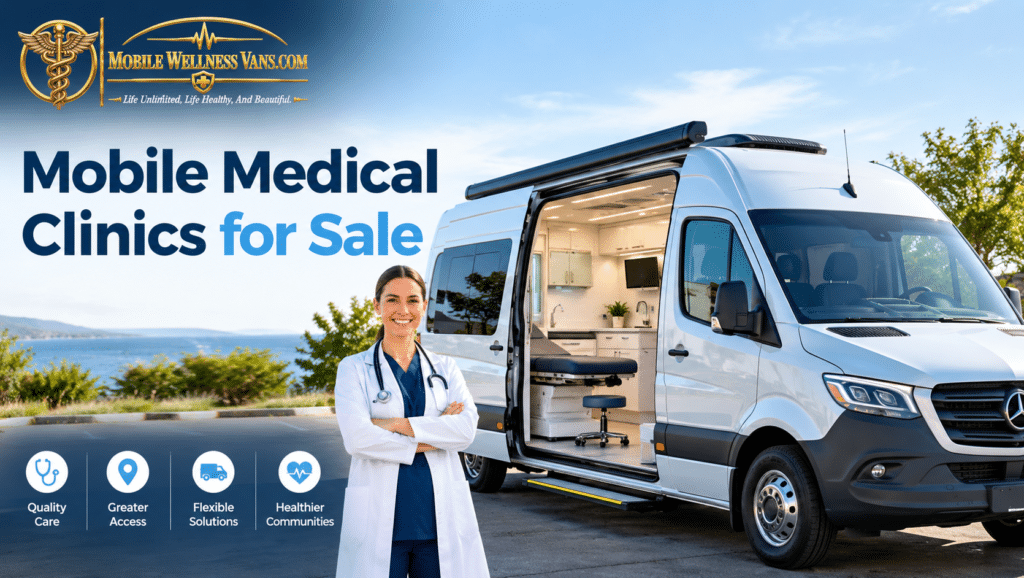
If expanding the healthcare outreach program is on a company’s table, it may come across the concept of mobile medical clinics for sale, which have the potential to expand a company’s healthcare footprint without just adhering to traditional healthcare venues.
But the choice of a mobile unit is not just a choice of vehicle. Some items organizations should look at include equipment, patient flow, accessibility, privacy, infection-control requirements, staffing, maintenance, and regulatory requirements.
Conclusion
Unfortunately, the problem is rarely a lack of awareness, it is a lack of practical access, with routine screenings. To solve this, mobile clinics are becoming popular that bring medical care closer to people and lowers travel and scheduling difficulties. Mobile wellness programs can be of specially created mobile units to extend preventive services and gain access to underserved areas of the community to provide options for screening in new places. You’re looking for a mobile healthcare solution visit Mobile Wellness Vans to find out what’s available.
Check out Mobile Wellness Vans!
FAQs
1. What is a mobile clinic?
Medical Clinic, Mobile is a health care facility that can move from one place to another and provide care as needed in an alternate location. It could be configured according to the medical service that it is being used for.
2. How do mobile clinics enhance the ability to access screening?
They place health care nearer to the people, which helps overcome difficulties like transportation, distance, and inconvenient schedules associated with accessing health care.
3. What are the places mobile medical clinics can go?
Services available may be provided through mobile clinics at suitable sites, including workplaces, community centres, schools, rural locations, health events and others.
4. Do mobile Health Clinics offer specialized services?
Yes. The mobile units can be adapted to provide chiropractic services, dental, occupational health services, diagnostic testing and/or even preventive screening services!
5. What should I consider when purchasing a mobile clinic?
Look at the services that are intended, equipment, interior layout, patient capacity, accessibility, privacy, workflow, regulatory requirements, maintenance and long-term operating requirements.
